Small Language Models Explained: When Smaller AI Can Be Better

Small language models trade some scale for speed, efficiency, lower hardware requirements, and easier local deployment. Learn when smaller AI is the better choice. Read more


AI models can contain millions or billions of learned parameters. Learn what parameters are, how training changes them, and why more parameters do not always mean a better model. Read more
AI memory is usually a product feature built around storage and retrieval, not a human-like ability inside the model. Learn how short-term and long-term memory work. Read more
Reasoning-focused AI models are designed to spend more computation on difficult tasks. Learn how they differ from ordinary generation and where they help. Read more
Embeddings turn words, documents, images, and other data into numerical representations that capture useful relationships. Learn why they power modern AI search. Read more
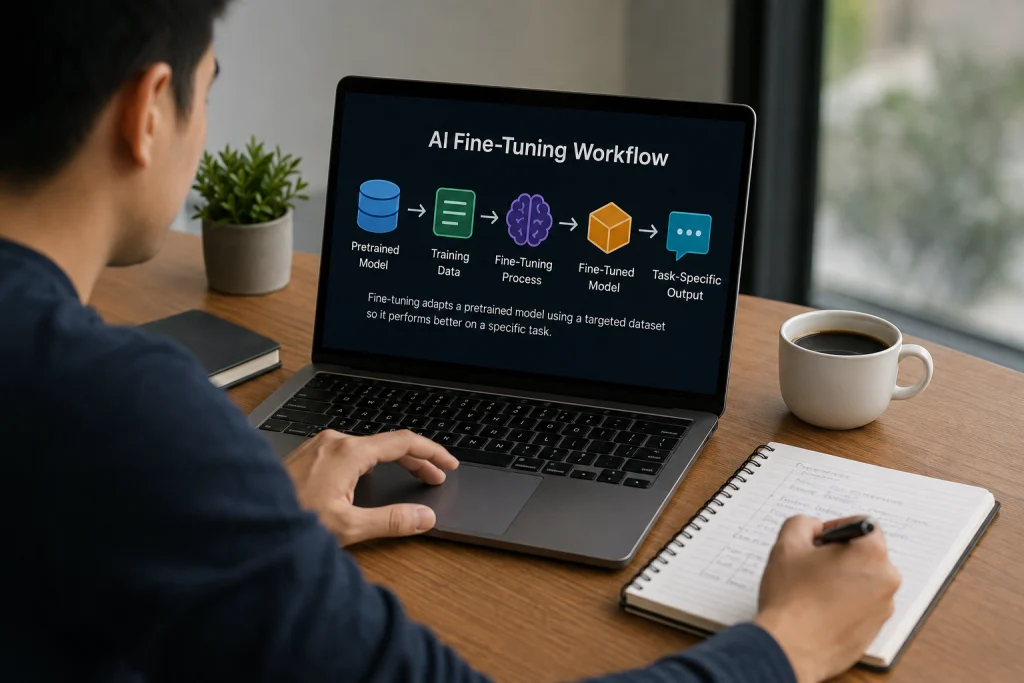
Fine-tuning adapts a pretrained AI model using task-specific examples. Learn what changes, when fine-tuning helps, and when another approach is better. Read more
RAG helps AI answer questions using external documents and knowledge sources. Learn how retrieval, embeddings, and generation work together. Read more
An AI context window limits how much information a model can use at one time. Learn how context works, why long chats lose details, and how to manage it. Read more
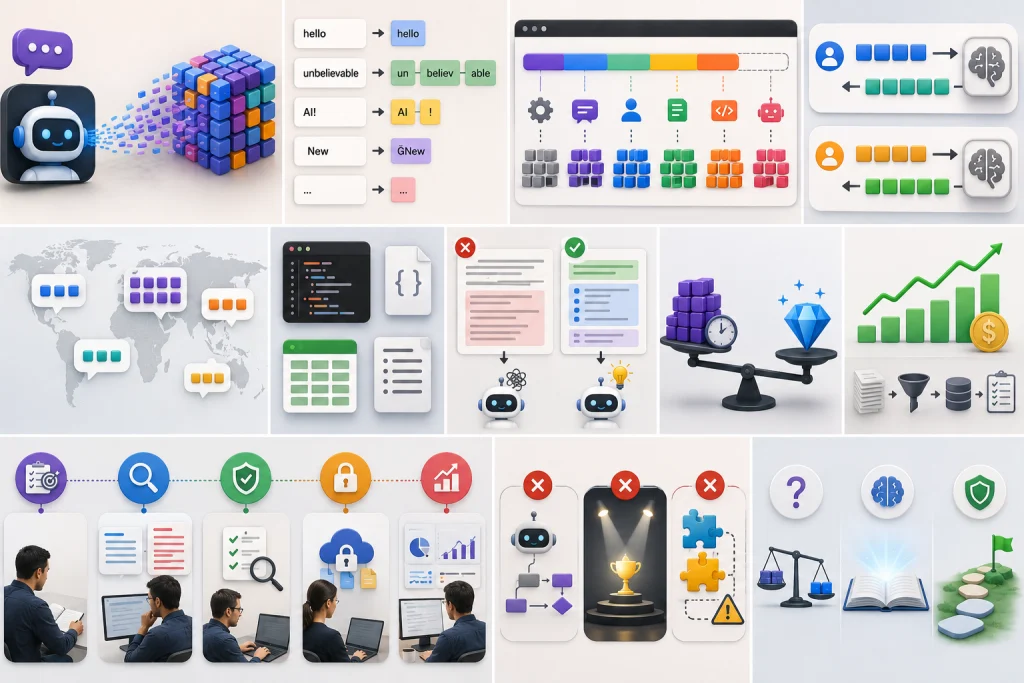
AI models process text as tokens rather than ordinary words. Learn what tokens are, how they affect context and cost, and why token limits matter. Read more
Multimodal AI can work with more than one type of information, such as text, images, audio, and video. Learn how it works and why it matters. Read more