Skip to content
ByteScope
  • Home
  • Learn AI
  • AI Tools
  • Digital Innovation
  • About
  • Contact

Learn AI

Open-Source vs Closed AI Models: Key Differences Explained

September 16, 2026 by ByteScope
A split workspace showing a self-hosted AI server and a cloud-based AI environment, illustrating the differences between open-source and closed AI models.

Open and closed AI models differ in access, control, deployment, customization, and responsibility. Learn the tradeoffs before choosing a model strategy.

Categories Learn AI

Small Language Models Explained: When Smaller AI Can Be Better

September 14, 2026 by ByteScope
A compact computer, laptop, and smartphone illustrate how small language models enable efficient AI processing on local devices.

Small language models trade some scale for speed, efficiency, lower hardware requirements, and easier local deployment. Learn when smaller AI is the better choice.

Categories Learn AI

AI Model Parameters Explained: What Billions of Parameters Really Mean

September 12, 2026 by ByteScope
Illustration of a neural network and interconnected computing components representing AI model parameters and how they influence machine learning models.

AI models can contain millions or billions of learned parameters. Learn what parameters are, how training changes them, and why more parameters do not always mean a better model.

Categories Learn AI

AI Memory Explained: How AI Systems Remember Information

September 10, 2026 by ByteScope
A conceptual illustration of AI memory showing a neural network connected to databases, documents, and storage systems that preserve information over time.

AI memory is usually a product feature built around storage and retrieval, not a human-like ability inside the model. Learn how short-term and long-term memory work.

Categories Learn AI

AI Reasoning Models Explained: How They Approach Complex Problems

September 8, 2026 by ByteScope
A conceptual workflow of interconnected objects representing how an AI reasoning model analyzes multiple steps before reaching a solution.

Reasoning-focused AI models are designed to spend more computation on difficult tasks. Learn how they differ from ordinary generation and where they help.

Categories Learn AI

AI Embeddings Explained: How Machines Represent Meaning

September 4, 2026 by ByteScope
Developer analyzing AI embeddings on a computer using vector visualizations to compare semantic relationships between data.

Embeddings turn words, documents, images, and other data into numerical representations that capture useful relationships. Learn why they power modern AI search.
Categories Learn AI

AI Fine-Tuning Explained: How Models Are Adapted for Specific Tasks

September 2, 2026 by ByteScope
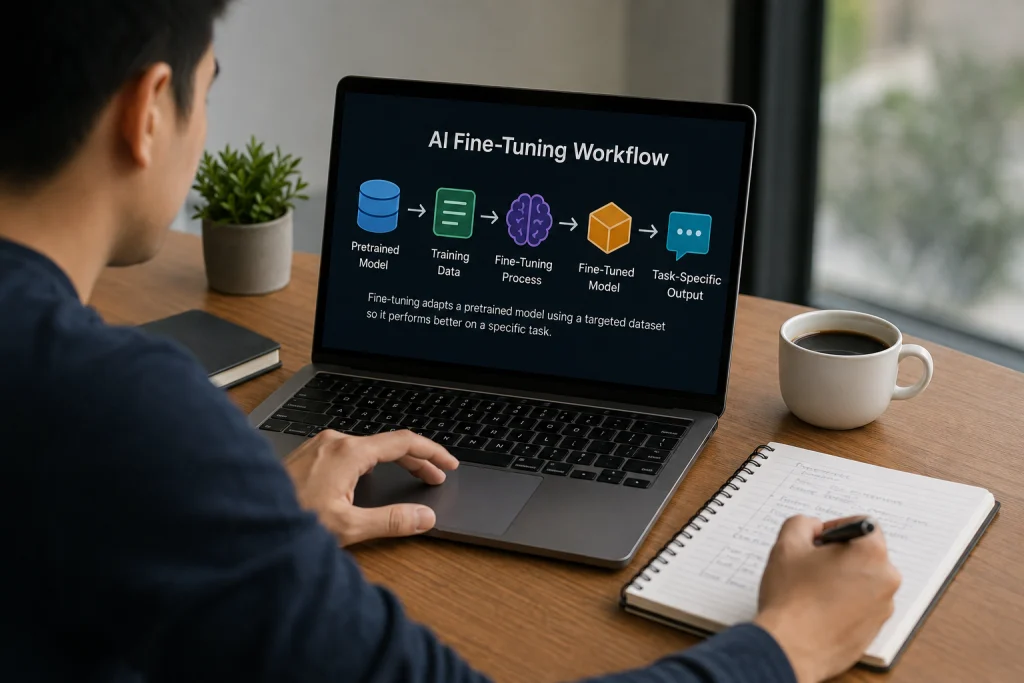
Software engineer fine-tuning an AI model on a laptop using training data and task-specific workflow visualizations.

Fine-tuning adapts a pretrained AI model using task-specific examples. Learn what changes, when fine-tuning helps, and when another approach is better.
Categories Learn AI

Retrieval-Augmented Generation (RAG) Explained for Beginners

August 31, 2026 by ByteScope
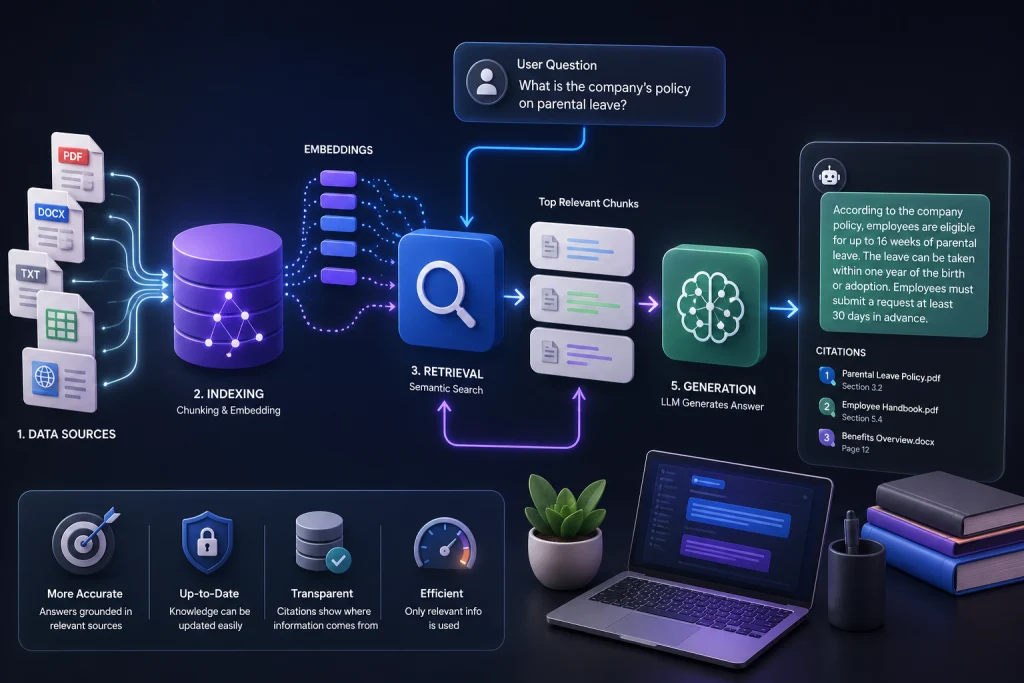
Illustration of a Retrieval-Augmented Generation (RAG) workflow showing document retrieval, semantic search, embeddings, AI context, and grounded answer generation from external knowledge sources.

RAG helps AI answer questions using external documents and knowledge sources. Learn how retrieval, embeddings, and generation work together.
Categories Learn AI

AI Context Windows Explained: How Much Information Can AI Remember?

August 29, 2026 by ByteScope
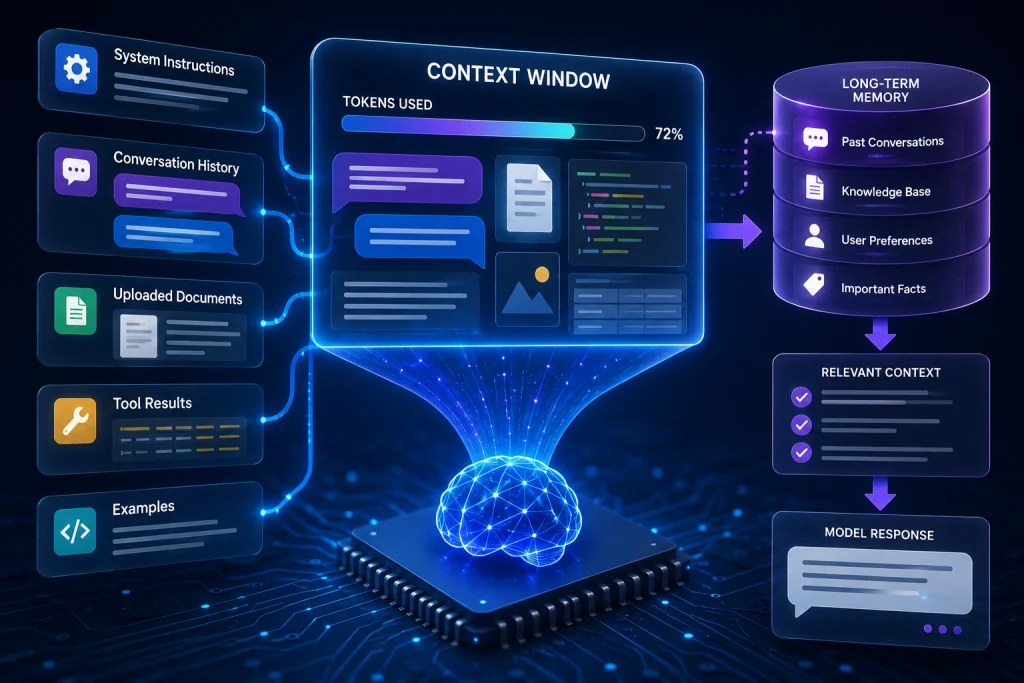
Illustration of an AI context window showing how system instructions, conversation history, uploaded documents, tool outputs, and memory work together to generate AI responses.

An AI context window limits how much information a model can use at one time. Learn how context works, why long chats lose details, and how to manage it.
Categories Learn AI

AI Tokens Explained: What They Are and Why They Matter

August 27, 2026 by ByteScope
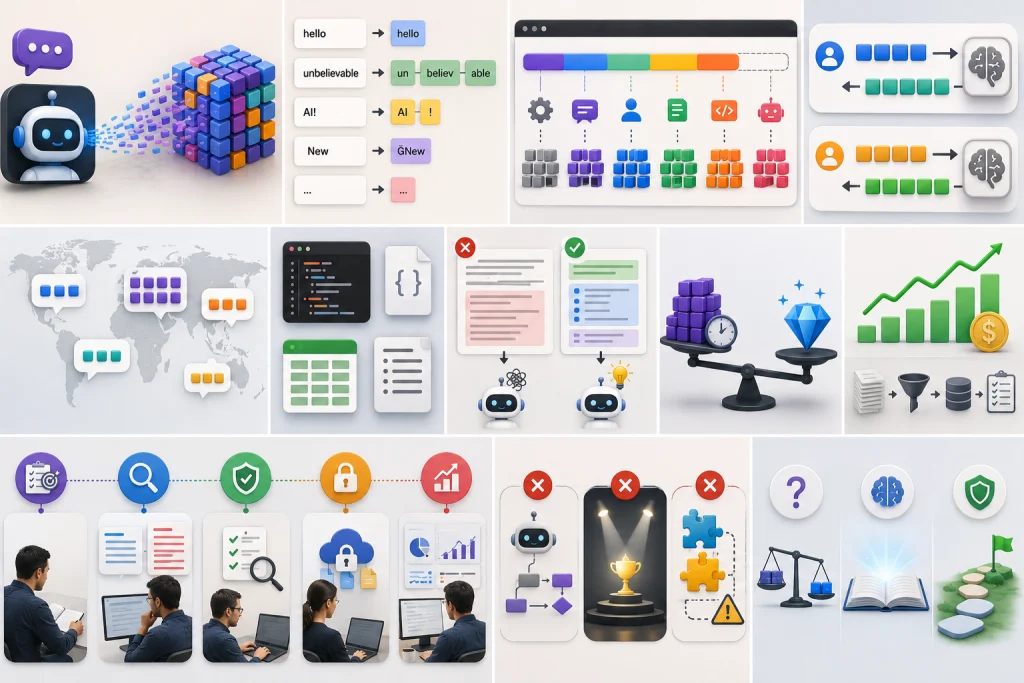
Abstract AI text being broken into small connected token units before entering a language model

AI models process text as tokens rather than ordinary words. Learn what tokens are, how they affect context and cost, and why token limits matter.

Categories Learn AI
Older posts
Page1 Page2 Page3 Next →
  • About
  • Contact
  • Privacy Policy
  • Disclaimer
© 2026 ByteScope. All rights reserved.