Skip to content
ByteScope
  • Home
  • Learn AI
  • AI Tools
  • Digital Innovation
  • About
  • Contact

Digital Innovation

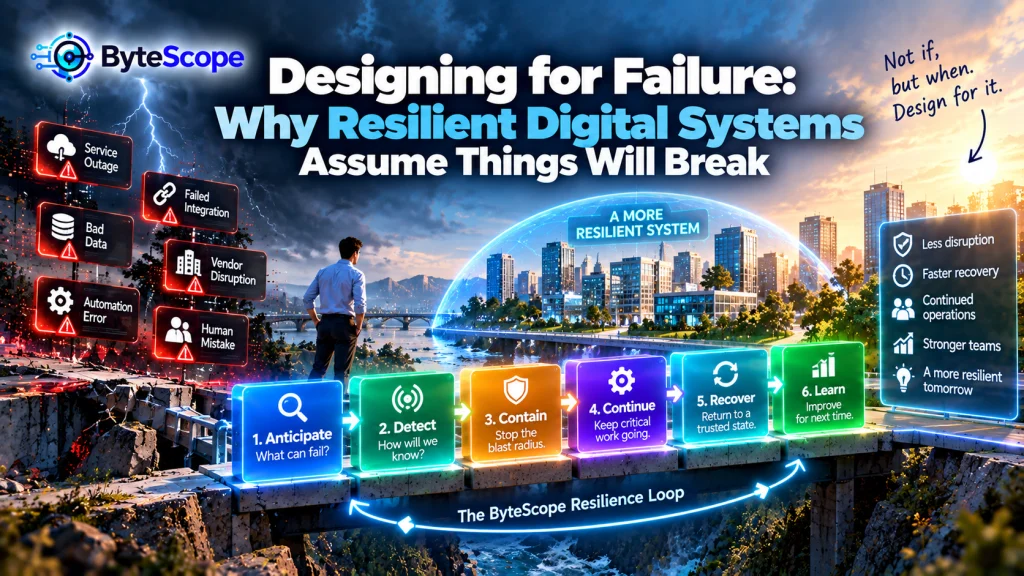
Designing for Failure: Why Resilient Digital Systems Assume Things Will Break
October 13, 2026 by ByteScope
Digital resilience framework showing how organizations anticipate, detect, contain, continue, recover, and learn from system failures.

Reliable digital systems are not built on the assumption that nothing will fail. They are designed to detect problems early, contain their impact, preserve critical work, recover safely, and learn from every disruption. Read more →
Categories Digital Innovation

Interoperability Is the Real Superpower: Why Connected Systems Beat Bigger Tech Stacks

October 12, 2026 by ByteScope
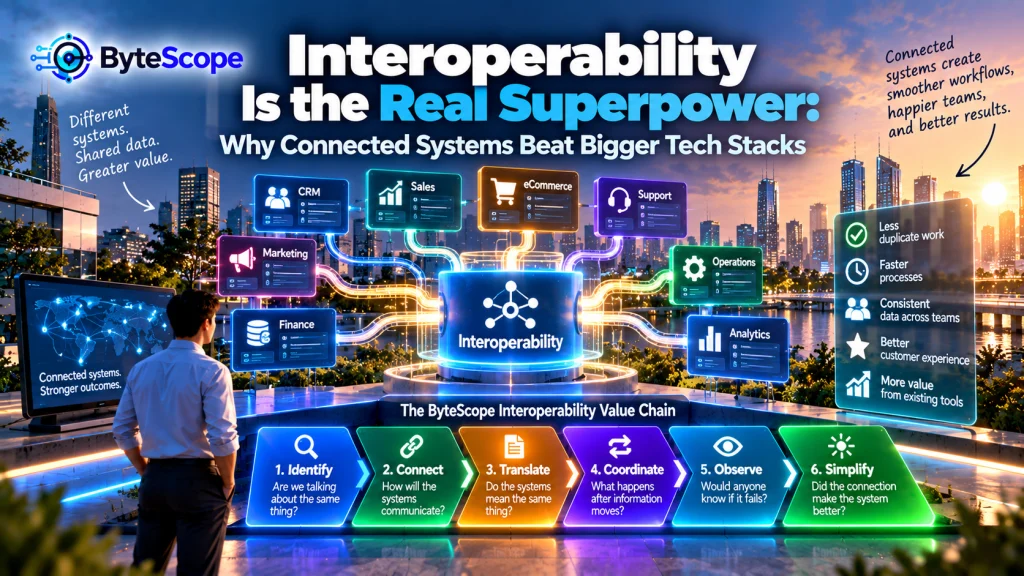
Interoperability connecting CRM, sales, ecommerce, support, marketing, finance, operations, and analytics into one coordinated digital system.

A larger technology stack does not automatically create a better digital organization. Real value appears when systems can exchange useful information, preserve context, coordinate workflows, and work together without forcing people to become the integration layer. Read more →

Categories Digital Innovation

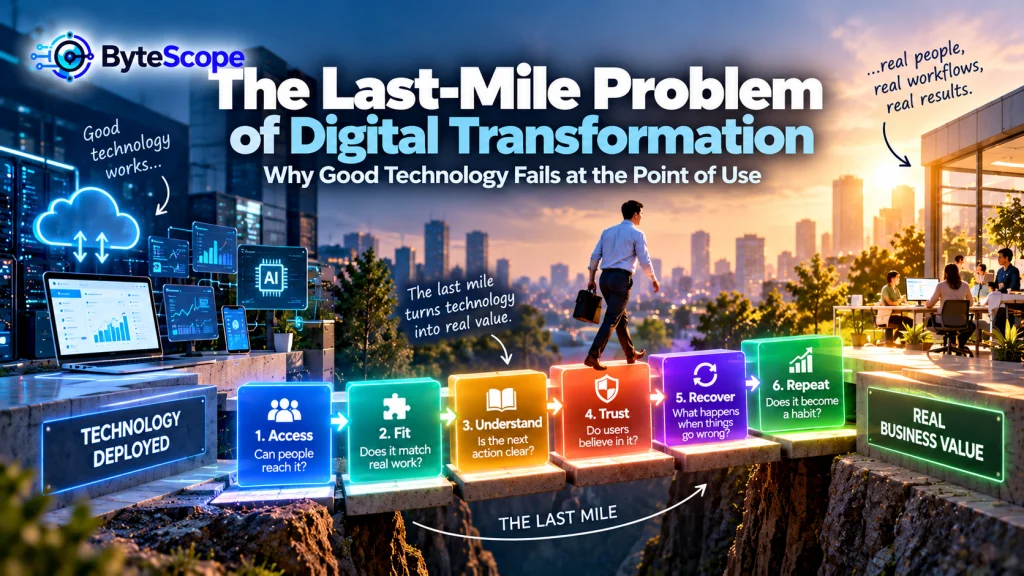
The Last-Mile Problem of Digital Transformation: Why Good Technology Fails at the Point of Use

October 11, 2026 by ByteScope
Digital transformation last-mile framework showing access, fit, understanding, trust, recovery, and repeat use turning deployed technology into real business value.

Digital transformation can succeed technically and still fail in practice. The last mile is where new technology meets real users, real workflows, time pressure, exceptions, and old habits—and where adoption either becomes lasting value or quietly disappears. Read more →

Categories Digital Innovation

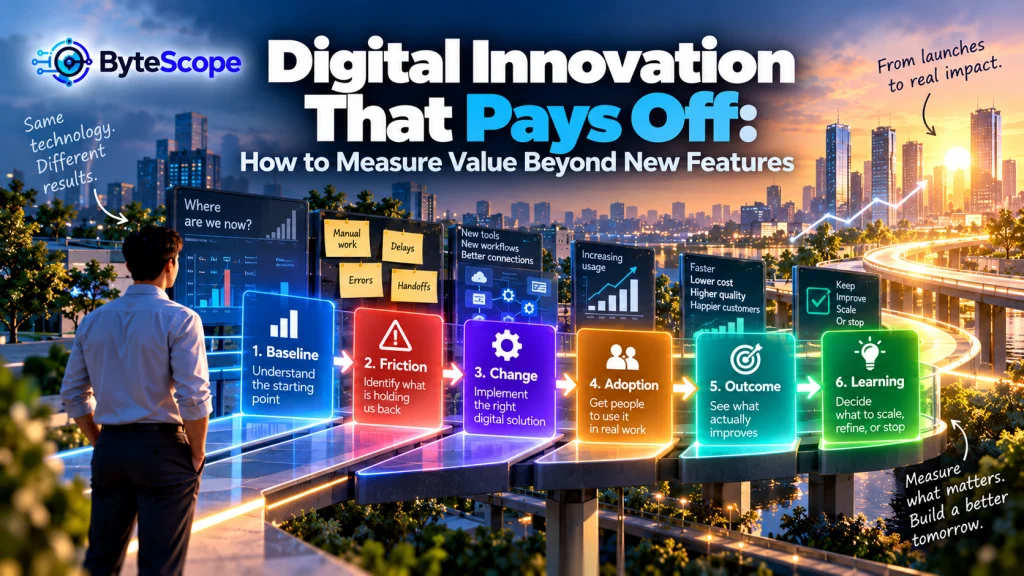
Digital Innovation That Pays Off: How to Measure Value Beyond New Features

October 10, 2026 by ByteScope
Digital innovation value measurement framework showing baseline, friction, change, adoption, outcomes, learning, and progress toward greater business value.

Launching new tools, automations, AI features, and digital services does not automatically mean innovation is working. The real test is whether digital change reduces friction, improves outcomes, earns adoption, and creates value that can be measured over time. Read more →

Categories Digital Innovation

The Trust Layer of Digital Innovation: Why Privacy, Security, and Governance Matter From Day One

October 9, 2026 by ByteScope
Digital innovation trust layer showing privacy, security, governance, access control, monitoring, and recovery across connected digital systems.

Digital innovation can make systems faster, smarter, and more connected, but every new capability also creates new responsibilities. Privacy, security, and governance form the trust layer that determines whether people can confidently use the systems an organization builds. Read more →

Categories Digital Innovation

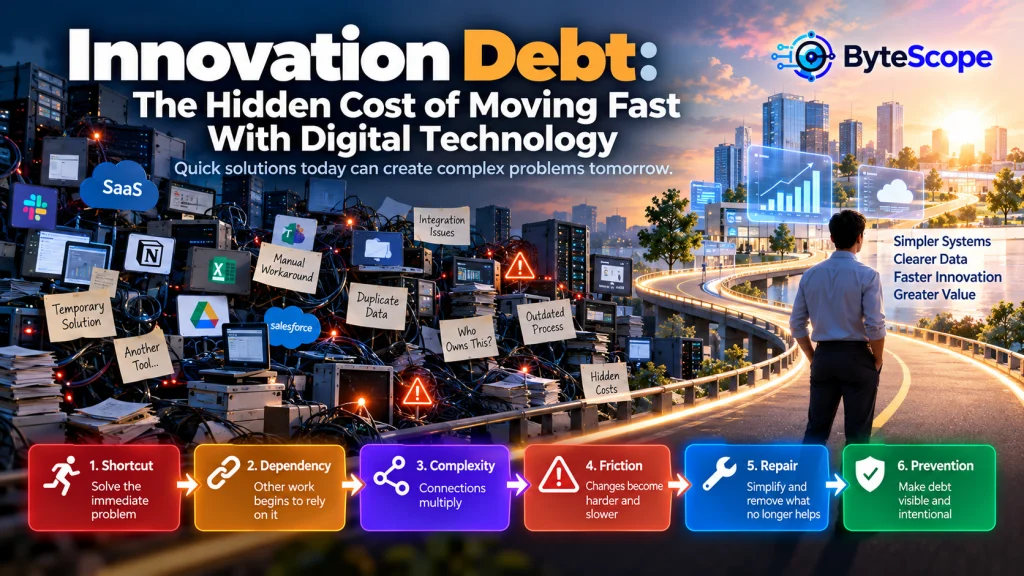
Innovation Debt: The Hidden Cost of Moving Fast With Digital Technology

October 8, 2026 by ByteScope
Innovation debt showing digital shortcuts, duplicate data, integration issues, hidden costs, and the path toward simpler systems and faster innovation.

Moving quickly with digital technology can solve immediate problems, but every shortcut can leave behind disconnected tools, fragile automations, duplicate data, and hidden maintenance work. Over time, that innovation debt can make future improvement harder. Read more →

Categories Digital Innovation

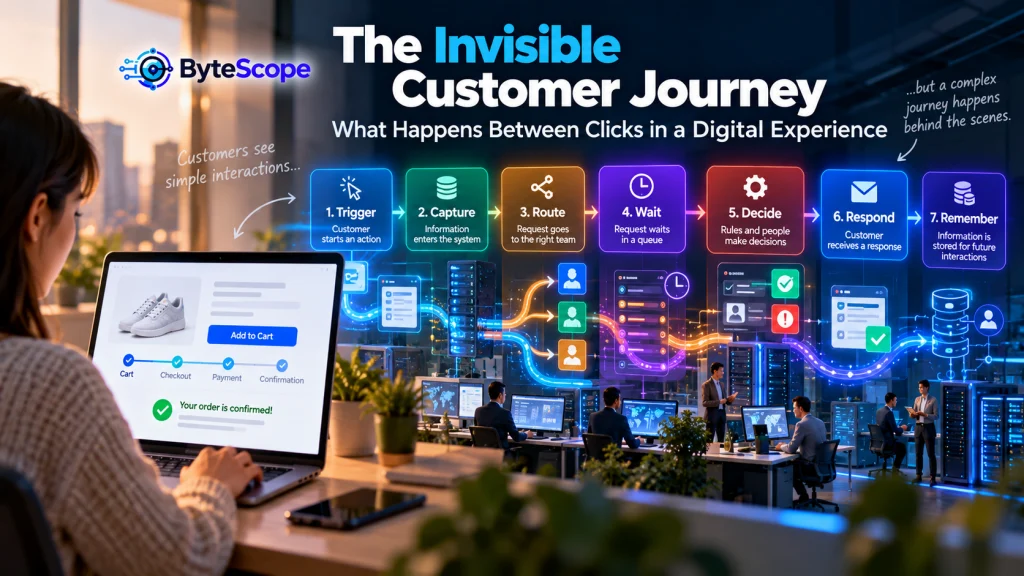
The Invisible Customer Journey: What Happens Between Clicks in a Digital Experience

October 7, 2026 by ByteScope
Invisible digital customer journey from customer click to backend routing, decisions, response, and data storage.

Customers see buttons, forms, messages, and confirmations. Behind every digital interaction, however, is an invisible journey of data, handoffs, decisions, waiting, and automation that can determine whether the experience feels effortless or frustrating. Read more →

Categories Digital Innovation

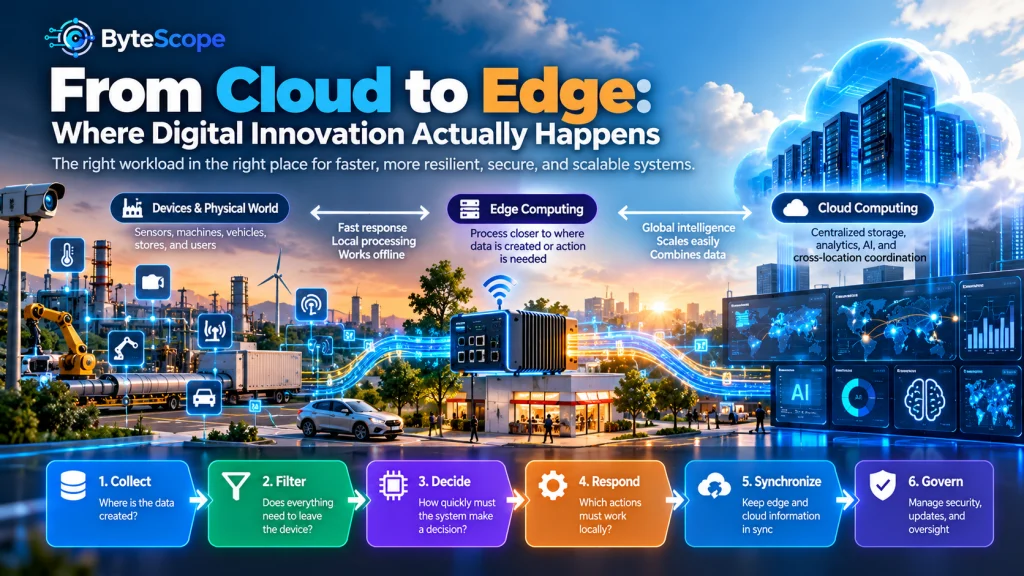
From Cloud to Edge: Where Digital Innovation Actually Happens

October 6, 2026 by ByteScope
Cloud and edge computing architecture showing connected devices, local processing, data synchronization, cloud analytics, AI, and digital infrastructure.

Digital innovation does not happen in one place. Some workloads belong in the cloud, others need to run closer to users, devices, and physical operations. Understanding where data should be processed can make digital systems faster, more resilient, and easier to scale. Read more →

Categories Digital Innovation

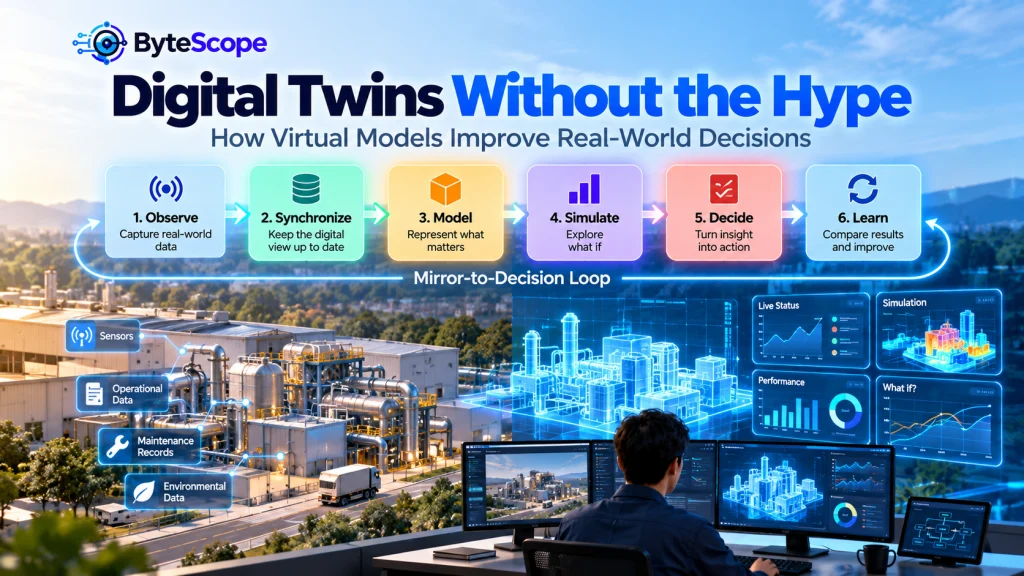
Digital Twins Without the Hype: How Virtual Models Improve Real-World Decisions

October 5, 2026 by ByteScope
Digital twin system connecting real-world industrial data, virtual models, simulation, decisions, and continuous learning.

Digital twins are more than virtual replicas. Their real value comes from connecting real-world data, models, simulations, and human decisions so organizations can understand what is happening, explore what might happen next, and act with better information. Read more →

Categories Digital Innovation

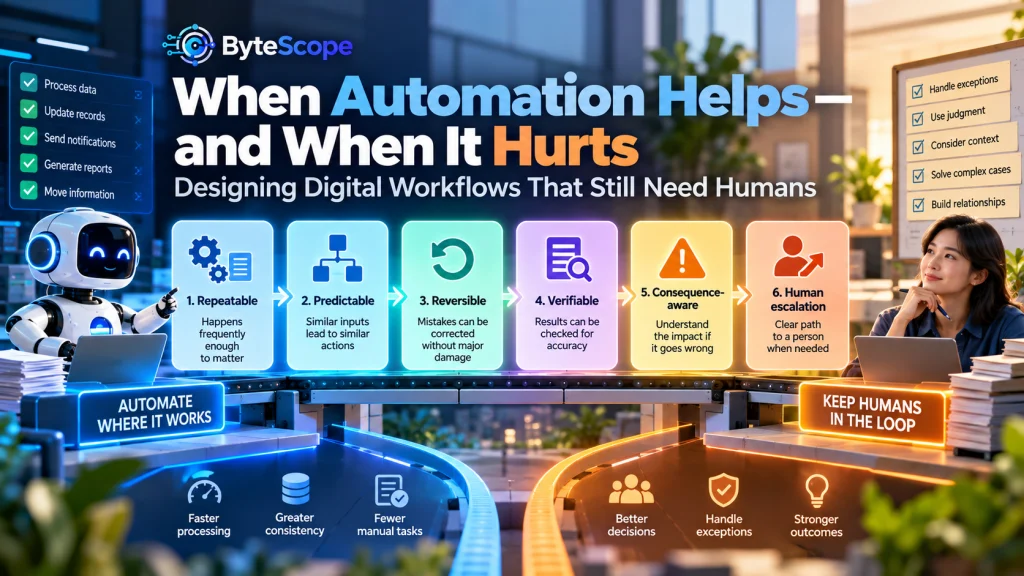
When Automation Helps—and When It Hurts: Designing Digital Workflows That Still Need Humans

October 4, 2026 by ByteScope
Automation and human-in-the-loop digital workflow showing repeatable, predictable, reversible, verifiable, consequence-aware, and human escalation stages.

Automation can remove repetitive work and speed up digital processes, but automating the wrong decisions can create errors, frustration, and hidden complexity. The best workflows know what machines should handle—and what should remain human. Read more →

Categories Digital Innovation
Older posts
Newer posts
← Previous Page1 Page2 Page3 Next →
  • About
  • Contact
  • Privacy Policy
  • Disclaimer
  • Terms and Conditions
© 2026 ByteScope • Built with GeneratePress
ByteScope

Practical insights on artificial intelligence, digital tools, and emerging technology.

Explore

  • Home
  • Learn AI
  • AI Tools
  • Digital Innovation

Company

  • About
  • Contact
  • Privacy Policy
  • Terms & Conditions
  • Disclaimer

© 2026 ByteScope. All rights reserved.